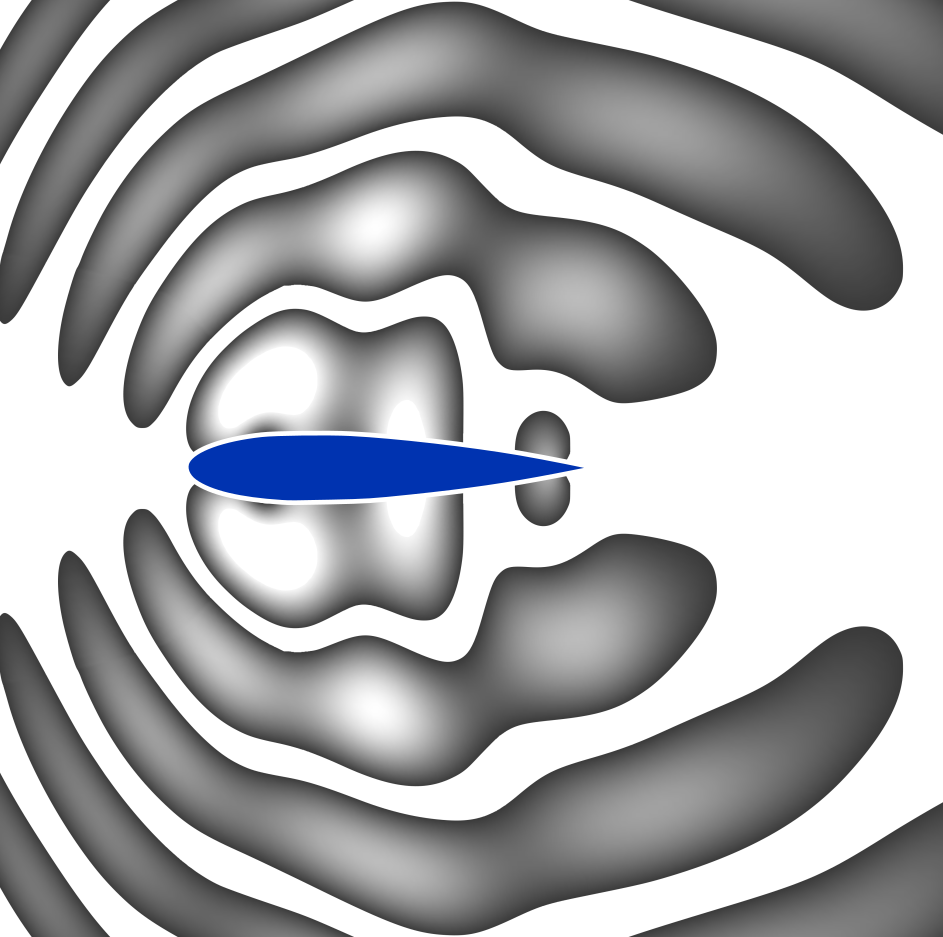

AANTC conducts outdoor noise measurements of DJI T100 across multiple flight conditions
The team led by Professor Xin Zhang at the Aerodynamics, Acoustics and Noise Control Technology Centre (AANTC) of the Hong Kong University of Science and Technology, together with Professor Chuntai Zheng's research group at Shenzhen Technology University, conducted outdoor noise measurements of a DJI T100 drone at the Bay Area Zhilian test facility in Pingshan District, Shenzhen, on 16–17 September 2026. The tests covered three take-off masses and four flight conditions, collecting acoustic data to study how loading and flight operation affect drone noise.
The measurements form part of the Environment and Conservation Fund project on environmental noise characterisation and regulatory suggestions for Hong Kong's low-altitude economy. The research aims to build an experimental basis for aircraft noise characterisation, propagation modelling and evidence-based technical recommendations.
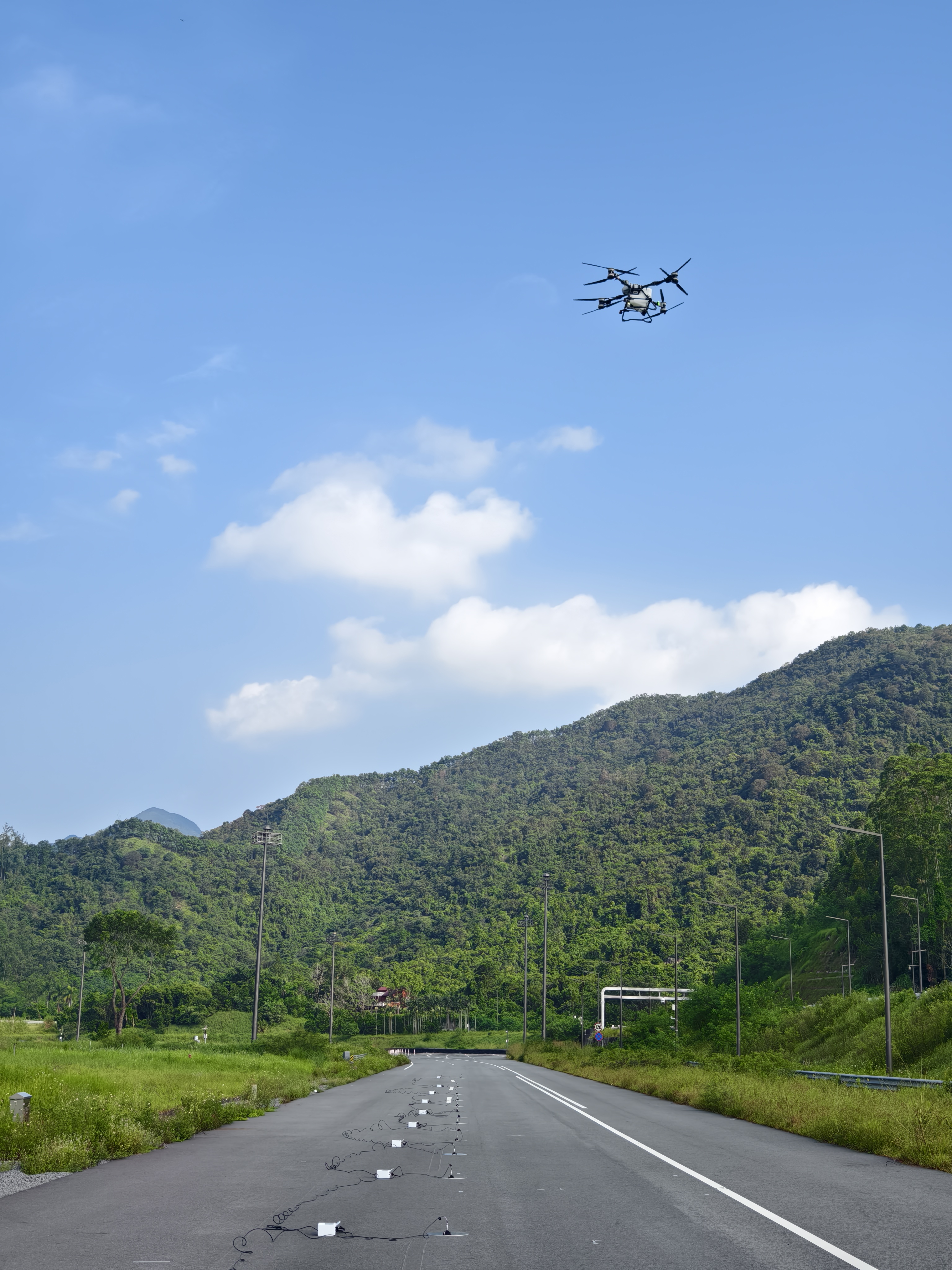
Measuring noise across loading and flight conditions
| Test condition | Measured setup and operating parameters |
|---|---|
| Take-off mass | 75 kg (unloaded), 112.5 kg (half-payload) and 150 kg (full-payload). |
| Hover | 20 m above the central microphone; four headings separated by 90 degrees. |
| Flyover | Flight path perpendicular to the microphone array; speeds of 5, 7.5, 10 and 12.5 m/s. |
| Vertical climb | From 10 m to 30 m; 75 kg: 2 and 4 m/s; 112.5 kg: 2 and 3 m/s; 150 kg: 2 m/s. |
| Vertical descent | From 30 m to 10 m; 75 kg and 112.5 kg: 1.5 and 3 m/s; 150 kg: 1.5 m/s. |

A linear array of 15 free-field microphones recorded sound at positions along the ground. By combining measurements at different aircraft headings with subsequent acoustic processing, the team will use the multi-position data to construct a noise radiation hemisphere, describing how sound radiates in different directions below the aircraft and providing directional source inputs for propagation predictions.
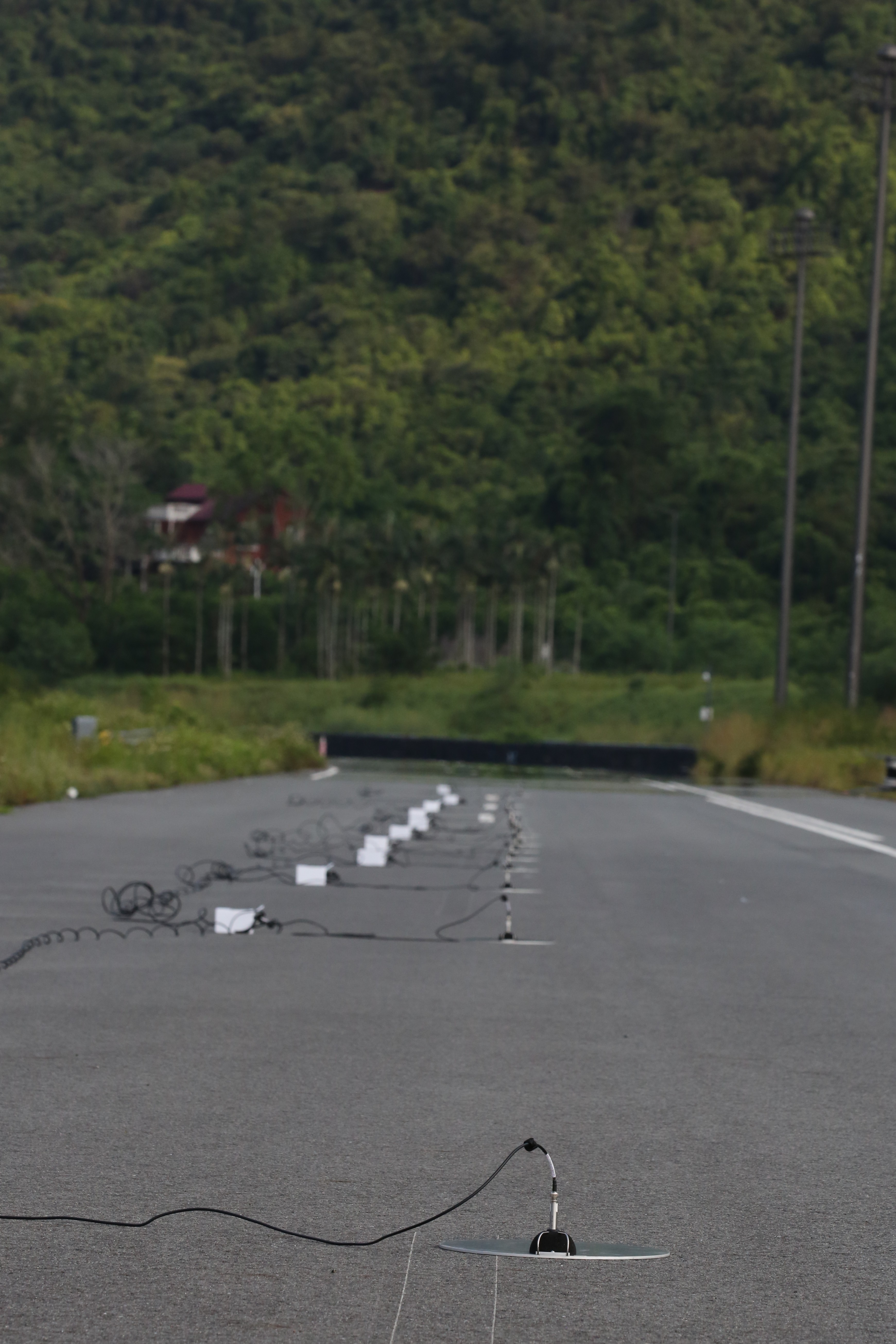
Measurements at different masses and flight conditions will also support analysis of how loading and operation affect noise.
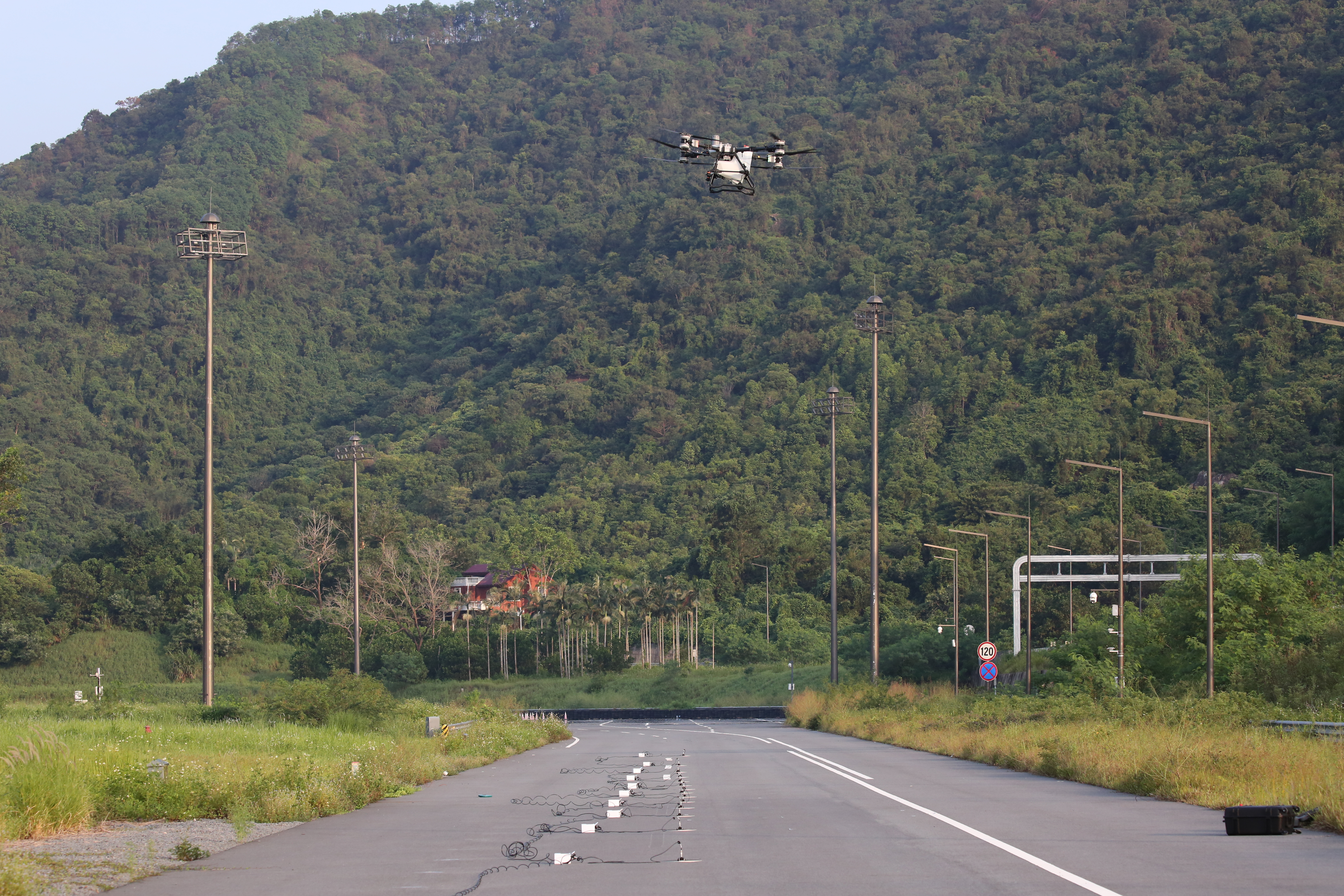
Informing low-altitude noise assessment and management
The campaign adds DJI T100 measurements to the project's outdoor data collection, which also includes the DJI M350. The next stage is to process the acoustic recordings into noise spectra and directional characteristics for the measured flight conditions, and to extend the measurements to additional aircraft.
The campaign extends the outdoor acoustic measurements to the 150 kg class. Under mainland China's Interim Regulations on the Administration of Unmanned Aircraft Flights, 150 kg is the maximum take-off weight ceiling for medium unmanned aircraft; large unmanned aircraft have a maximum take-off weight exceeding 150 kg. Hong Kong's Small Unmanned Aircraft Order classifies Category C aircraft by their weight on each flight, covering more than 25 kg and up to 150 kg. The tested conditions from 75 to 150 kg therefore cover the upper part of this weight range.
Combined with subsequent spectral, noise radiation hemisphere and propagation analyses, the data are expected to provide source information for noise assessments of operating scenarios relevant to Hong Kong's Low-altitude Economy Regulatory Sandbox. They will also contribute experimental evidence to research on future drone noise measurement procedures, assessment methods and management standards. Comparisons across loading and flight conditions will support studies of individual aircraft noise emissions and acoustic impacts along flight routes and around take-off and landing sites, informing technical regulatory recommendations.